


Portrait miniatures have been produced as early as the 15th century, when they first appeared in illuminated manuscripts. The term derives from the Italian miniatura ('manuscript illumination' or 'small picture') and the Latin miniare ('to paint red'), referring to the red lead paint used to decorate capital letters.
This technique captivated some of the most prominent artists of the 16th century, notably Hans Holbein the Younger, court painter to Henry VIII. Holbein transferred manuscript illumination techniques to fine portraiture using watercolour on vellum. Holbein's mastery of the craft famously convinced the King to marry a woman he had never seen: his fourth wife, Anne of Cleves. The portrait impressed Henry enough to sign the marriage treaty—though the match proved less than heavenly when Henry later complained the portrait was overly flattering!
Around the turn of the 18th century, artists shifted swiftly from vellum to ivory as a base. Ivory was initially an odd choice because its smooth, non-porous surface naturally repelled watercolour paint. However, once artists learned to prepare the surface, ivory became the standard. Its natural translucency provided a luminous glow that enhanced skin tones beautifully.
By the 19th century, the demand for miniatures expanded rapidly. Naval officers carried them as keepsakes of loved ones, families commissioned them to mourn the departed (often embedding a lock of hair in the back), and the growing English middle class embraced them as an affordable alternative to full-sized oil portraits.
_260917102451348.jpg)
That rich history brings us to the featured lots in our upcoming sale: two fantastic sets of portrait miniatures housed in carved ivory frames. Souvenirs like these were eagerly collected by travellers on the 'Grand Tour.' Continental travel offered a rare chance to bring home true luxury craftsmanship, with towns like Dieppe—famous for high-quality ivory carving—becoming major hubs for fine souvenirs.
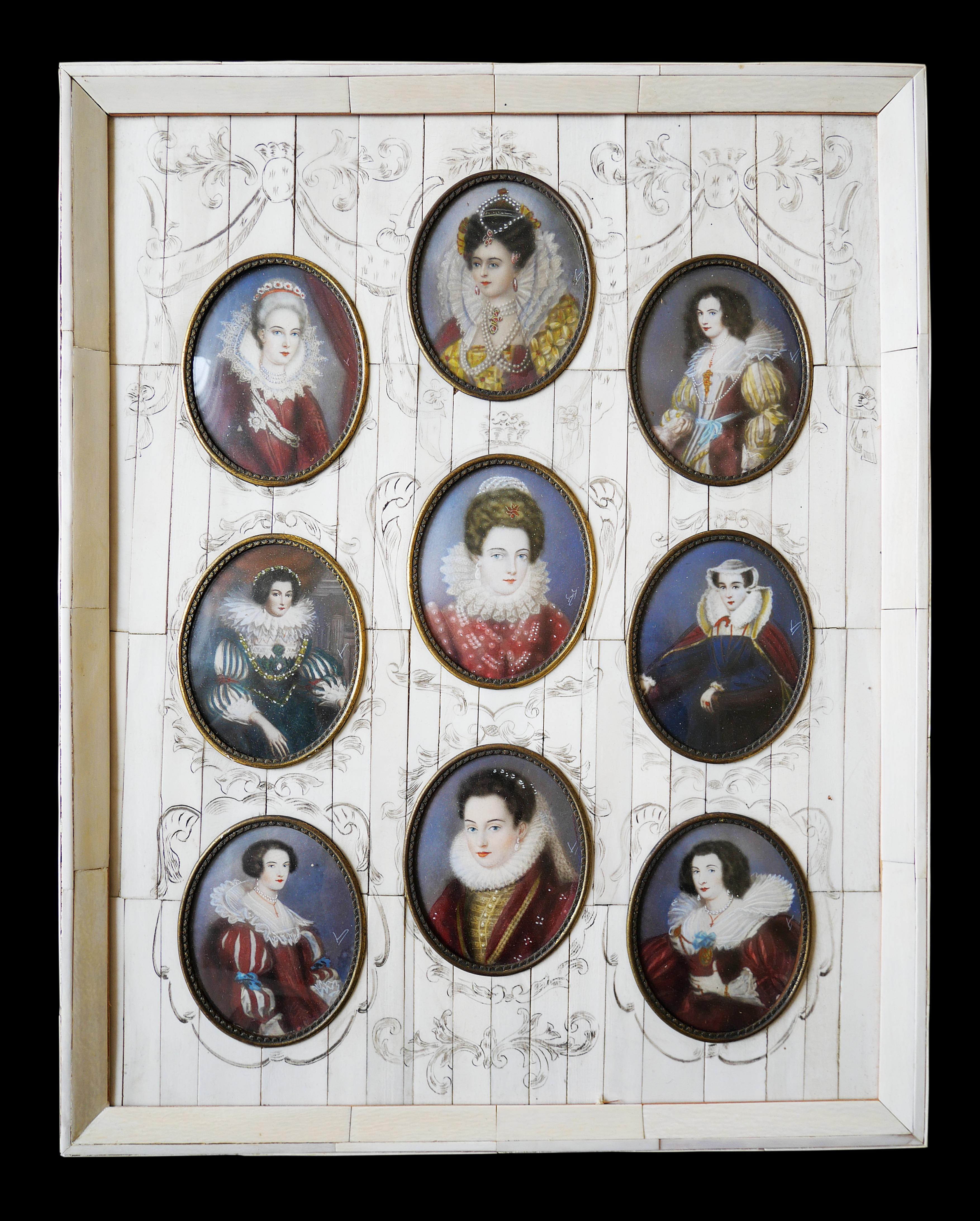
In an age dominated by digital photos, we still crave the tangible weight of physical artefacts. Just like the 19th-century travellers, sailors, and lovers who cherished these miniature portraits, we find that history and memory are always most evocative when held in the hand.
View the lots here: https://tinyurl.com/yc3ux98u